
Friedrich Engels
Marxist · Europe · 1820 to 1895
German thinker who worked with Marx for life and co-wrote the Communist Manifesto in 1848.
What it is
Friedrich Engels (1820 to 1895) was a German philosopher, social theorist and socialist, best known for his lifelong collaboration with Karl Marx. He was born in Barmen, Prussia, the son of a successful manufacturer. His devoutly Pietist parents expected him to join the family business, and were not pleased by his wish to study philosophy.
He joined the Young Hegelians, writing under pseudonyms on the conditions of the working class. With Marx he wrote The Communist Manifesto (1848). After the failed revolutions of that year both men settled in England. After Marx died, Engels edited and finished the second and third volumes of Capital. He wrote that he had willingly played "second fiddle" to his more famous friend, though he was a writer of range in his own right.
The main ideas
- Idealism against materialism. He argued that the history of philosophy can be understood as a conflict between two basic positions, idealism and materialism, with the question of how thinking relates to being as the paramount question.
- Dialectics. "Materialism" and "dialectics" are keywords for Engels, though he used them in several senses and what they mean in his work is disputed.
- The history of nature. He wrote about nature as having a history, applying his philosophical ideas to the natural sciences.
- Production and class. In his theory of history he dealt with production and class, with base and superstructure, and with ideology and morality.
- Women and the family. In later writing he revised his account of history to take up women and the family.
- A shared work. The collected editions of his work and Marx's are presented together, and the nature of their collaboration is itself a question.
What it looks like in practice
Picture two historians explaining a strike, one by the ideas of the leaders, one by the conditions of work and the ownership of the factory. Engels would say that the second kind of explanation gets nearer to what moves history, and that the two are in the long run rival pictures of what comes first, mind or the material world. This is an illustration of his line of questioning, not a passage from his writing.
Books and moments
- The Communist Manifesto (1848), written with Marx, is the best-known statement of their programme.
- His pamphlet on Feuerbach presents the conflict between idealism and materialism in the history of philosophy.
- The second and third volumes of Capital were edited and completed by him after Marx died.
Questions and criticism
- Second fiddle? He called himself the junior partner, and scholars still ask how much of what is called Marxism is his.
- Contested terms. What he meant by materialism and dialectics is disputed, partly because he used the words in different senses and in answer to very different questions.
- Nature and dialectics. It is fair to ask whether the methods that suit the study of history can also be applied to nature.
Close neighbours
Karl Marx is the thinker he worked with all his life, and Georg Hegel and Ludwig Feuerbach are the thinkers he engaged with in his pamphlet on the history of philosophy. The page on Georg Lukács shows a later thinker who developed Marxism in another direction.
Written by epchē in our own words, and checked against independent sources on 29 October 2026. The sources are listed below.
Where to start reading
Books by Friedrich Engels or about them, from the easiest way in to the harder ones.
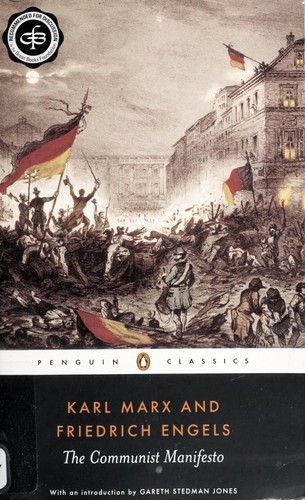
Covers belong to their publishers and are shown so you can recognise the book.
Philosophies they belong to or are close to
Other Marxist thinkers
- Karl Marx · 1818 to 1883
- Gyorgy Lukacs · 1885 to 1971
- Antonio Gramsci · 1891 to 1937
Sources we used
- Friedrich Engels · Stanford Encyclopedia of Philosophy, read on 29 October 2026
- Friedrich Engels · Wikipedia, read on 29 October 2026