
Seneca
Hellenistic · Europe · 4 BCE to 65
Roman statesman and writer whose letters give practical Stoic advice on time, anger and facing death.
What it is
Seneca was a Roman Stoic philosopher, writer and adviser to the emperor Nero, whose letters, essays and tragedies shaped how later ages understood Stoicism. He wrote in Latin and is a major philosophical figure of the Roman imperial period. His Letters to Lucilius are among the most widely read Stoic texts in existence.
He was born in Corduba, in Spain, around the turn of the era, and he lived under several emperors. The emperor Claudius exiled him to Corsica in 41 CE, and he was later recalled. He became a friend and tutor of Nero. In 65 CE he was compelled to commit suicide. His philosophical writings were read again with enthusiasm in the Renaissance, and many readers still approach Stoicism through them.
The main ideas
- A working Stoic. Seneca took the framework of the earlier Stoics and argued largely from within it. His writing aims to urge readers to philosophy, to explain his position, to defend Stoicism against opponents, to portray a philosophical life, and to criticise the vices of his society.
- Virtue is enough. He agrees with the Stoics that virtue alone is sufficient for happiness.
- Mastering the emotions. Much of his work concerns emotions and how to deal with them. His essay On Anger is a main source for his thinking on this.
- Fate and providence. He wrote on fate and on providence, including an essay titled On Providence.
- The natural world. His Natural Questions looks at weather and other natural events from a Stoic point of view.
- The letters. In his Letters to Lucilius he writes to a friend about how to live a philosophical life.
What it looks like in practice
Picture someone who has just been insulted in a meeting and feels anger rising. A Senecan reader would pause, ask whether the first jolt of feeling needs to turn into action, and recall that the response is up to them. Later, in the evening, they might write a short note of reflection, as Seneca did in his letters. This is an illustration of the approach, not a passage from his works.
Books and moments
- Letters to Lucilius (the Moral Letters) are his best-known philosophical work.
- On Anger, On Providence and other essays treat single topics.
- Natural Questions is his book on the natural world.
- The tragedies are eight plays that survive.
- The exile to Corsica in 41 CE and the forced suicide in 65 CE mark the turns of his life.
Questions and criticism
- Can one be a Stoic at court? He was a friend and tutor of an emperor and a writer on philosophy, and it is fair to ask how the two roles fit together.
- Can emotions be mastered? A Stoic hope is that anger and other emotions can be worked on, and it is fair to ask how far that is true.
- One Seneca or two? He wrote both philosophy and tragedy, and readers ask how the two sides of his work relate.
Close neighbours
The page on Stoicism describes the school he belonged to.
Written by epchē in our own words, and checked against independent sources on 9 October 2026. The sources are listed below.
Where to start reading
Books by Seneca or about them, from the easiest way in to the harder ones.
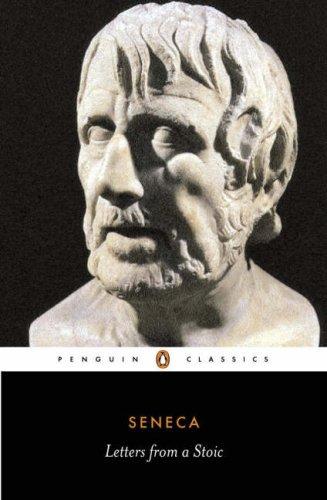
Covers belong to their publishers and are shown so you can recognise the book.
Philosophies they belong to or are close to
Other Hellenistic thinkers
- Antisthenes · 445 to 365 BCE
- Diogenes of Sinope · 412 to 323 BCE
- Crates of Thebes · 365 to 285 BCE
- Pyrrho of Elis · 360 to 270 BCE
- Epicurus · 341 to 270 BCE
- Zeno of Citium · 334 to 262 BCE
- Cleanthes · 331 to 232 BCE
- Chrysippus · 279 to 206 BCE
- Carneades · 214 to 129 BCE
- Cicero · 106 to 43 BCE
Sources we used
- Seneca · Stanford Encyclopedia of Philosophy, read on 9 October 2026
- Seneca, Lucius Annaeus · Internet Encyclopedia of Philosophy, read on 9 October 2026