
Objectivism
American · North America · from 1960
Objectivism is Ayn Rand's philosophy. It says reality is real whatever we wish, and that reason is the only way to know it. It says each person should pursue their own happiness, and that a free market best protects the individual.
What it is
Objectivism is the philosophy of Ayn Rand (1905 to 1982), a Russian-born American novelist who fled the Soviet Union. It holds that reality is objective, that reason is the only way to know it, that each person should pursue their own happiness as their moral aim, and that only free-market capitalism respects individual rights.
Rand first expressed her ideas in novels such as The Fountainhead and Atlas Shrugged, and then set them out more systematically in nonfiction essays in the 1960s and 1970s. Professional philosophers have mostly rejected her work.
The main ideas
- Reality is objective. Facts hold whatever anyone wishes.
- Reason is the only absolute. She rejected mysticism and faith.
- Rational self-interest. Each person's own happiness is a legitimate moral aim. Self-interest, properly understood, is the standard of morality.
- Against altruism. She saw self-sacrifice as destructive.
- The virtues. The chief ones are rationality, integrity, honesty, justice, independence, productiveness and pride.
- Voluntary exchange. Productive people create more opportunity for others, so competition can turn into cooperation.
- Politics. Only laissez-faire capitalism respects individual rights. Government should protect rights, not redistribute wealth.
What it looks like in practice
Picture someone who has been taught that a good person puts others first. The Objectivist replies that this treats giving up your own life as the highest virtue. Their view is that your life is your own, you should use your reason to decide what is good for you, and you should deal with other people by trade, each side gaining, not by sacrifice, either way.
That holds in business and in friendship alike. What matters in either is that what you give and what you take are both chosen. The same reasoning leads to her politics: a government exists to protect people's rights to live by their own judgment, and when it takes from some to give to others, it treats those people as means to someone else's end.
Questions and criticism
- Do the arguments support the conclusions? Critics say her arguments often do not reach her conclusions, and that her polemical style and dismissal of other thinkers weakened her case.
- What is her highest value? Scholars disagree about whether it is survival, flourishing or happiness. The answer changes what her egoism and her theory of rights mean.
Close neighbours
Objectivism lies close to libertarianism, which also puts the individual first and favours free markets, though Objectivism is a full philosophy and not only a political theory. It sits opposite Ubuntu on the question of the person against the community.
Written by epchē in our own words, and checked against independent sources on 2 October 2026. The sources are listed below.
Where to start reading
Books for this philosophy, from the easiest way in to the harder ones. Each is chosen for a newcomer, whatever the shop.
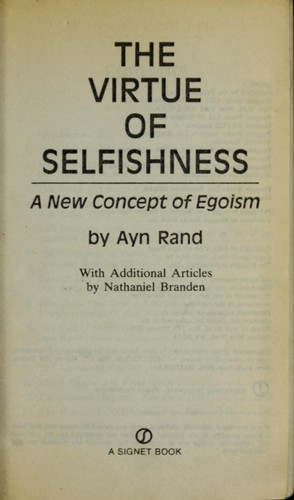
- Objectivism: The Philosophy of Ayn Rand Leonard Peikoff
Covers belong to their publishers and are shown so you can recognise the book.
What it holds
These are the questions this philosophy cares about most and the side it leans toward. They are our reading of it, and the same positions the walk uses.
- The person comes first · clearly When a person's wishes and the community's needs pull apart, which should come first?
- Free markets work best · clearly Should trade and work be left mostly to free markets?
- Close people come first · clearly Does ethics start with yourself and the people close to you, or with equal care for everyone?
- Only evidence counts · clearly Can faith or trust in a teaching show us truths that evidence cannot?
- Reason is the best guide · clearly Where does the most reliable knowledge come from: careful thinking, or what we see, hear and test?
- Liberty comes first · clearly When freedom and equality pull apart, which should win?
- Giving up your own good is a mistake · clearly Is the best life lived for your own happiness?
- All within this world · clearly Is everything that matters found inside this world, or does it point to something beyond it?
Ideas it speaks to
Short articles on the questions this philosophy answers most firmly.
- The person or the community first · leans toward: The person comes first
- Free markets or strong limits · leans toward: Free markets work best
- Close people first, or everyone equally · leans toward: Close people come first
- Faith and evidence · leans toward: Only evidence counts
- Reason or experience · leans toward: Reason is the best guide
- Liberty or equality first · leans toward: Liberty comes first
Compared with
Thinkers
Related philosophies
Influenced
- Libertarianism · The Internet Encyclopedia says her ideas fed libertarian groups. (scholars disagree about this link)
More from the American tradition
Sources we used
- Ayn Rand · Stanford Encyclopedia of Philosophy, read on 2 October 2026
- Ayn Rand · Internet Encyclopedia of Philosophy, read on 2 October 2026
Where do you stand?
Every philosophy takes sides. Here is one question Objectivism answers firmly:
When a person's wishes and the community's needs pull apart, which should come first?
- Objectivism leans toward: The person comes first
- The other side: The community comes first
The walk asks about this and the questions around it, two ideas at a time, and shows which philosophies your own answers sit closest to. No account, and your answers stay on your device.