
Sigmund Freud
Modern European · Europe · 1856 to 1939
Austrian doctor who held that much of the mind is unconscious, and that early desires and conflicts shape adult life.
What it is
Sigmund Freud (1856 to 1939) was an Austrian doctor who founded psychoanalysis, both a theory of the mind and a way of treating mental illness through talking. He held that much of what we think, feel and do comes from mental processes of which we are not aware, shaped by early experience and by wishes we have pushed out of view.
He was born in Freiberg, in Moravia, and moved to Vienna as a small child, living and working there for most of his life. He first worked with the physician Joseph Breuer. When the Nazis took over Austria in 1938, he was allowed to leave for England, where he died in 1939.
The main ideas
- The unconscious. Much of mental life, he argued, goes on out of sight. Behaviour that seems senseless, such as a slip of the tongue or a symptom, can be explained by hidden mental processes.
- Repression. Wishes and memories that are too painful are pushed out of awareness, but they do not disappear.
- Childhood matters. He held that experiences in early childhood, including sexual ones, are crucial for shaping the adult personality.
- Three parts of the mind. In 1923 he set out a model of the id, the ego and the superego, which has been compared with Plato's division of the soul.
- Talking as treatment. He introduced free association, the interpretation of dreams and attention to transference, the feelings a patient directs at the analyst, as ways to reach the unconscious and to restore balance among the three parts.
- A science? He saw himself as a scientist and psychoanalysis as a new science of the mind, a claim that has been argued over ever since.
What it looks like in practice
Think of a time you forgot a meeting you dreaded, or said the wrong name at a bad moment. Freud would not call it mere chance. He would ask what the mistake allowed you to avoid or say, and treat it as a clue to a wish or a worry you had not admitted. This is an illustration of his line of questioning, not a passage from his writing.
Books and moments
- His works on the interpretation of dreams, on everyday slips and on the structure of the mind are collected in many editions.
- The tripartite model of id, ego and superego dates from 1923.
Questions and criticism
- Is it science? He insisted that psychoanalysis was a science, and critics ask whether its claims can be tested.
- Heated controversy. The dispute over Freud is more heated and many-sided than over almost any other thinker since 1850. Critics range from doubts about the evidence to objections to the theory's stress on sexuality.
- Does everything have a hidden cause? His deterministic view of the mind invites the question of how much of behaviour it really explains.
Close neighbours
Plato’s division of the soul is the older picture to which his three-part model has been compared. The pages on Jacques Lacan, who set out to reread him, and on Herbert Marcuse, who reworked his theory of instincts, show the long reach of his ideas.
Written by epchē in our own words, and checked against independent sources on 29 October 2026. The sources are listed below.
Where to start reading
Books by Sigmund Freud or about them, from the easiest way in to the harder ones.
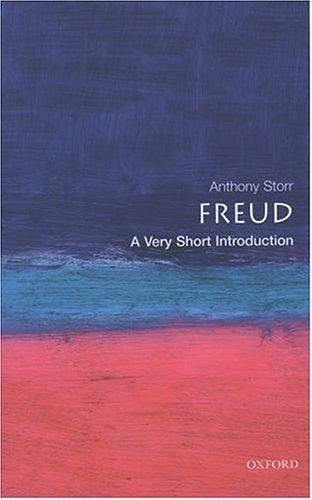
Covers belong to their publishers and are shown so you can recognise the book.
Who they connect to
Influenced
- Jacques Lacan · Lacan built his work on a close return to Freud.
Influenced by
- Arthur Schopenhauer · Freud found in Schopenhauer an earlier account of drives beneath reason. (scholars disagree about this link)
- Friedrich Nietzsche · Freud said he avoided reading Nietzsche, yet they share the view that hidden drives lie beneath reason. (scholars disagree about this link)
Other Modern European thinkers
- Arthur Schopenhauer · 1788 to 1860
- Alexis de Tocqueville · 1805 to 1859
- Thomas Henry Huxley · 1825 to 1895
- Wilhelm Dilthey · 1833 to 1911
- Friedrich Nietzsche · 1844 to 1900
- Georg Simmel · 1858 to 1918
- Henri Bergson · 1859 to 1941
- Max Weber · 1864 to 1920
- Ernst Cassirer · 1874 to 1945
- Jose Ortega y Gasset · 1883 to 1955
Sources we used
- Sigmund Freud · Internet Encyclopedia of Philosophy, read on 29 October 2026
- Sigmund Freud · Wikipedia, read on 29 October 2026