
Marcus Aurelius
Hellenistic · Europe · 121 to 180
Roman emperor whose private notebook uses Stoic ideas to think about duty, how everything passes, and self-control.
What it is
Marcus Aurelius was born in 121 CE, was educated in rhetoric and philosophy, and succeeded his adoptive father Antoninus Pius as Roman emperor in 161, ruling until his death in 180. He was also a Stoic philosopher, and his Meditations, written in Greek as notes to himself, give a rare view of how a person tried to live by Stoic ideas in a hard and busy life.
His reign was troubled by wars on the northern frontier, rebellions and a plague. The Meditations were written for his own use, and they read as exercises in self-improvement, not as a treatise. They stress moral improvement, civic duty and the place of a person in the order of the whole.
The main ideas
- Notes to himself. The Meditations are a private notebook of reminders about how to think and act, written for his own use.
- Duty to the common good. He saw himself as part of a larger community of all people and acted for its sake, which is the Stoic idea of a world city.
- Learning from Epictetus. He knew the teaching of the Stoic Epictetus and quotes it in the Meditations.
- Accepting what happens. He tried to accept events as part of the whole of nature and to keep his judgment steady.
What it looks like in practice
Picture someone woken before dawn who reminds themselves, in plain words, that the day will bring difficult people and that their task is to act well anyway. That kind of morning reminder is the spirit of the Meditations. This is an illustration, not a quotation.
Books and moments
- The Meditations is the only philosophical work of his that survives.
- Letters to Fronto are a part of his correspondence with his teacher that survives, though they add little to his philosophy.
Questions and criticism
- Was he strictly a Stoic? He never calls himself one in the Meditations, and he seems open to ideas from other schools.
- Does a ruler's duty fit a philosopher's calm? He had to fight wars and manage a state while writing about detachment, and how the two fit is still asked.
- Is the book philosophy or personal reflection? It is mainly a private record, so it is debated how much it shows a worked-out view.
Close neighbours
Epictetus was his main teacher in spirit, and the page on Epictetus shows the same ideas. The page on Stoicism sets out the school he followed.
Written by epchē in our own words, and checked against independent sources on 9 October 2026. The sources are listed below.
Where to start reading
Books by Marcus Aurelius or about them, from the easiest way in to the harder ones.
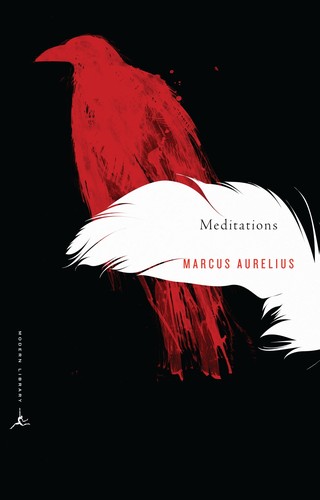
Covers belong to their publishers and are shown so you can recognise the book.
Philosophies they belong to or are close to
Who they connect to
Influenced by
- Epictetus · Marcus thanks a teacher for lending him Epictetus's lectures.
Other Hellenistic thinkers
- Antisthenes · 445 to 365 BCE
- Diogenes of Sinope · 412 to 323 BCE
- Crates of Thebes · 365 to 285 BCE
- Pyrrho of Elis · 360 to 270 BCE
- Epicurus · 341 to 270 BCE
- Zeno of Citium · 334 to 262 BCE
- Cleanthes · 331 to 232 BCE
- Chrysippus · 279 to 206 BCE
- Carneades · 214 to 129 BCE
- Cicero · 106 to 43 BCE
Sources we used
- Marcus Aurelius · Stanford Encyclopedia of Philosophy, read on 9 October 2026
- Marcus Aurelius · Internet Encyclopedia of Philosophy, read on 9 October 2026
- Marcus Aurelius · New World Encyclopedia, read on 9 October 2026
- Marcus Aurelius · Wikipedia, read on 9 October 2026