
Aristotelian virtue ethics
Ancient Greek · Europe · from 350 BCE
Being good is about the kind of person you become. Aristotle taught that a good life comes from building good habits, like courage and honesty, and using sound judgment in each situation.
What it is
Aristotelian virtue ethics is the ethics of the Greek philosopher Aristotle (384 to 322 BCE), set out above all in his Nicomachean Ethics. It asks what a good human life is, and answers that the aim of life is to flourish. Flourishing comes from developing good character through habit and wise judgment.
The main shift from other ways of thinking about ethics is the question it puts first. It is less 'what should I do?' than 'what kind of person should I become?'. Being good, on this view, is a matter of character, formed over time and in the company of other people, more than of following rules or counting results.
The main ideas
- Flourishing is the final aim. The Greek word is eudaimonia, often translated as happiness or flourishing. It is the end that every other good serves.
- The human function. Aristotle argues that what is special to humans is the activity of reason. Living well therefore means exercising reason well, in line with excellence.
- Virtue is a middle path. A virtue of character lies between two faults, such as courage between rashness and cowardice. This is not arithmetic: finding the right amount is a matter of good judgment about the situation.
- Habit builds character. We become just by doing just things, starting in childhood. Virtue is formed by practice, not by teaching alone.
- Practical wisdom. Judging what a situation asks cannot be done by learning general rules. It comes from experience and from thinking about particular cases.
- Friends and means. Flourishing needs good friends and some outside goods. Without enough resources, virtuous action is held back.
What it looks like in practice
Picture someone deciding whether to speak up about something unfair at work. A rule-follower asks what the policy says. A results-counter asks which option leads to the least harm. The Aristotelian asks what a courageous and fair person would do here: neither reckless nor timid, neither blunt for the sake of it nor silent for convenience.
That person is not born knowing. They have practised smaller acts of the same kind, and they have people around them whose judgment they trust. The answer is found by judging this case well, not by looking it up.
Questions and criticism
- Does the function argument prove enough? It shows that some kind of excellence matters. Whether it explains why the traditional virtues are the right ones is a fair question.
- Is virtue enough, or do outside goods matter? If virtuous activity is the highest good, it is fair to ask why luck and resources count at all.
- Can the middle be found by a formula? Some situations do not fit a picture of a mean between two extremes, such as a choice between rival duties.
Close neighbours
Aristotelian virtue ethics is close to Stoicism in making character central, and apart from it on whether outside goods matter. It contrasts with utilitarianism, which looks at results, and with Kantian ethics, which looks at duty and rules.
Written by epchē in our own words, and checked against independent sources on 7 October 2026. The sources are listed below.
Where to start reading
Books for this philosophy, from the easiest way in to the harder ones. Each is chosen for a newcomer, whatever the shop.
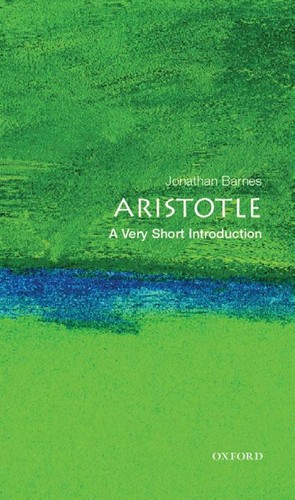
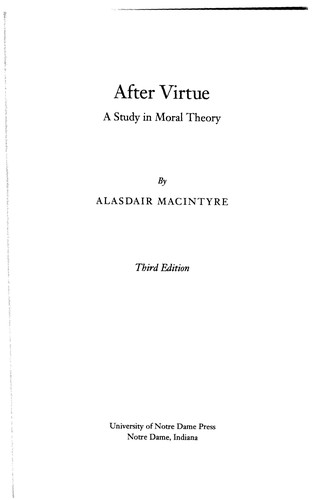
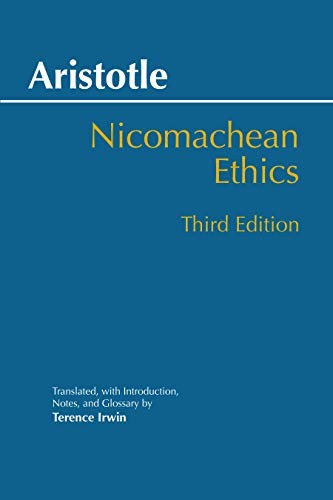
Covers belong to their publishers and are shown so you can recognise the book.
What it holds
These are the questions this philosophy cares about most and the side it leans toward. They are our reading of it, and the same positions the walk uses.
- Being a good person · clearly Is ethics mostly about which acts are right, or about what kind of person you become?
- A good life needs some luck too · clearly Can a good person live well even after losing health, friends and money?
- We can plan a good society · clearly In politics, is the better guide what has lasted for generations?
- Some things are wrong for everyone · leaning Are some moral rules true for everyone, everywhere?
- The community comes first · leaning When a person's wishes and the community's needs pull apart, which should come first?
- Meaning is given to us · leaning Does life have a purpose before you choose anything?
Ideas it speaks to
Short articles on the questions this philosophy answers most firmly.
- Acts or character in ethics · leans toward: Being a good person
- Is goodness enough for a good life · leans toward: A good life needs some luck too
- What has lasted or a planned society · leans toward: We can plan a good society
- Moral relativism and universal morality · leans toward: Some things are wrong for everyone
- The person or the community first · leans toward: The community comes first
- Meaning given or made · leans toward: Meaning is given to us
Compared with
- Aristotelian virtue ethics versus Confucianism
- Aristotelian virtue ethics versus Conservatism
- Aristotelian virtue ethics versus Cynicism
- Aristotelian virtue ethics versus Kantian deontology
- Aristotelian virtue ethics versus Stoicism
- Aristotelian virtue ethics versus Ubuntu and African communal thought
- Aristotelian virtue ethics versus Utilitarianism
Thinkers
Related philosophies
Runs parallel to
- Stoicism · Both make character the centre of ethics, though they disagree about the place of outside goods.
Sources we used
- Aristotle's Ethics · Stanford Encyclopedia of Philosophy, read on 7 October 2026
- Aristotle · Internet Encyclopedia of Philosophy, read on 7 October 2026
- Aristotle: Ethics · Internet Encyclopedia of Philosophy, read on 7 October 2026
Read more elsewhere
- Stanford Encyclopedia of Philosophy · long and detailed, written by specialists
Where do you stand?
Every philosophy takes sides. Here is one question Aristotelian virtue ethics answers firmly:
Is ethics mostly about which acts are right, or about what kind of person you become?
- Aristotelian virtue ethics leans toward: Being a good person
- The other side: Which acts are right
The walk asks about this and the questions around it, two ideas at a time, and shows which philosophies your own answers sit closest to. No account, and your answers stay on your device.