
Conservatism
Political Conservative · Europe · from 1790
Conservatism values inherited institutions and customs. It trusts experience over abstract theory, and prefers slow reform to sudden change. It sees people as limited, and society as something that grows, not something to be rebuilt from a plan.
What it is
Conservatism is a political outlook that aims to preserve traditional institutions, customs and values, with the details varying by culture and nation. It values what has lasted, trusts accumulated experience over abstract theory, and prefers slow reform to sudden change. It sees people as limited and society as something that grows, not something to be rebuilt from a plan.
Its mark, as scholars describe it, is scepticism about abstract reasoning in politics. Conservatives appeal to experience rather than to reason alone, and they see the ideal and the practical as inseparable.
The main ideas
- Tradition and gradual reform. Established institutions carry accumulated wisdom, so change should come slowly. A state with no means of change has no means of keeping itself, as Burke put it.
- Scepticism of rationalism. Conservatives distrust plans made from first principles, and revolution above all. They see society as a complex growing thing, not a machine.
- Human limits. People are seen as frail and limited in their sympathy, so utopian schemes of improvement are doubted.
- Order and authority. Tradition, hierarchy and traditional authority are cornerstones. Where liberalism sides with individual freedom, conservatism leans toward authority, while still valuing limited government and doubting centralised power.
- Rights from practice. Conservatives reject abstract universal rights derived from human autonomy, and prefer rights that grew out of practice.
What it looks like in practice
Picture a town council deciding whether to rebuild a market square that has been the same for two hundred years. A planner offers a clever new design. The conservative question is not whether the design is better in the abstract, but what the square is doing that nobody has written down, and what would be lost if it went. If change is needed, make it small, watch what happens, and adjust.
People and moments
- Edmund Burke is widely seen as the founder of modern conservatism. He opposed the French Revolution while backing American independence.
- Michael Oakeshott described conservatism as a disposition: to prefer the familiar to the unknown, and the tried to the untried.
Questions and criticism
- What deserves preserving? Critics ask whether conservatism can say, and whether it defends privilege and inequality because they are old.
- Does doubting principles slide into relativism? If abstract principles are not trusted, what stops 'what we have always done' from excusing anything?
- Conservatives disagree about markets. Some forms favour minimal economic intervention. Burkean conservatives accept state planning when it works.
- Conservatism is not reaction. Conservatives are distinguished from reactionaries, who resist all change.
Close neighbours
Conservatism is most often set against liberalism, which sides with individual freedom where conservatism leans toward authority.
Written by epchē in our own words, and checked against independent sources on 2 October 2026. The sources are listed below.
Where to start reading
Books for this philosophy, from the easiest way in to the harder ones. Each is chosen for a newcomer, whatever the shop.
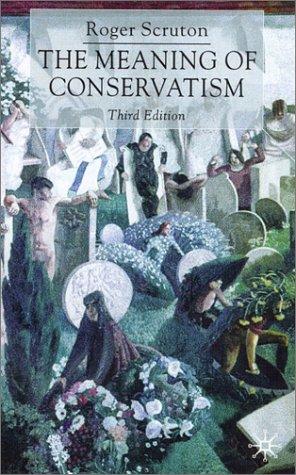
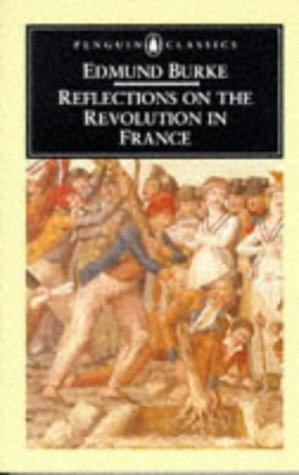
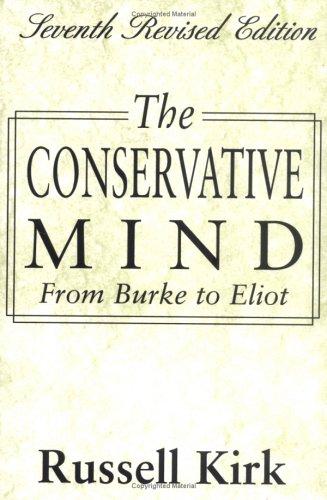
Covers belong to their publishers and are shown so you can recognise the book.
What it holds
These are the questions this philosophy cares about most and the side it leans toward. They are our reading of it, and the same positions the walk uses.
- Keep what has lasted · clearly Should we trust old customs and institutions, or question and change them?
- What has lasted knows best · clearly In politics, is the better guide what has lasted for generations?
- Experience is the best guide · clearly Where does the most reliable knowledge come from: careful thinking, or what we see, hear and test?
- The community comes first · leaning When a person's wishes and the community's needs pull apart, which should come first?
Ideas it speaks to
Short articles on the questions this philosophy answers most firmly.
- Tradition or change · leans toward: Keep what has lasted
- What has lasted or a planned society · leans toward: What has lasted knows best
- Reason or experience · leans toward: Experience is the best guide
- The person or the community first · leans toward: The community comes first
Compared with
- Conservatism versus Aristotelian virtue ethics
- Conservatism versus Confucianism
- Conservatism versus Humean empiricism and skepticism
- Conservatism versus Liberalism
Thinkers
Related philosophies
Reacted against
- Liberalism · Conservatives reject abstract universal rights and trust practice over theory.
Sources we used
- Conservatism · Stanford Encyclopedia of Philosophy, read on 2 October 2026
- Conservatism · Wikipedia, read on 2 October 2026
- Conservatism · New World Encyclopedia, read on 2 October 2026
Where do you stand?
Every philosophy takes sides. Here is one question Conservatism answers firmly:
Should we trust old customs and institutions, or question and change them?
- Conservatism leans toward: Keep what has lasted
- The other side: Question and change
The walk asks about this and the questions around it, two ideas at a time, and shows which philosophies your own answers sit closest to. No account, and your answers stay on your device.