
Kantian deontology
Modern Ethics · Europe · from 1785
Immanuel Kant said some things are our duty whatever happens. Moral rules apply to everyone who can reason. Always treat people as having their own worth, never only as tools.
What it is
Kantian deontology is the ethics of Immanuel Kant (1724 to 1804). Its central claim is that some things are required of us as a matter of duty, whatever the results. An act is right when it comes from respect for a moral law that reason gives us and that binds everyone, and people are never to be treated only as tools.
The word deontology comes from the Greek for duty. Kant set this ethics out mainly in the Groundwork for the Metaphysics of Morals (1785). Morality is treated as a matter of reason and duty, not of feelings or results.
The main ideas
- The good will. The only thing good without any condition is a good will: the will to act from respect for the moral law.
- Acting from duty. An act has moral worth when it is done because it is the duty, and not only in line with duty for some other reason, such as self-interest.
- The categorical imperative. This is a command that binds every rational being without exception. It has two main forms. First, act only on a rule you could will to become a universal law. Second, treat humanity, in yourself and in others, always as an end and never merely as a means.
- Autonomy. The moral law is not imposed from outside. Reason gives it to itself, and being bound by it is a kind of freedom.
- Results do not decide. What makes an act right is not what it brings about. Consequences do not set its moral worth.
What it looks like in practice
Picture someone who could get ahead by telling a small lie that nobody will ever discover. The Kantian does not ask how much good or harm the lie would do. They ask a different question: what if everyone in my position did this? If the practice would undo itself, because nobody could trust anything said, then it is not an option, however attractive this one case looks.
The second form adds a test about people. Does this plan treat the other person only as a means to my end, or does it also respect them as someone who can make their own choices? A deal that works only because the other person is deceived fails the test.
Questions and criticism
- Too empty? Critics say the imperative gives too little content to produce actual duties without extra claims about human nature.
- Duties that clash. When two duties pull in different directions, it is disputed how to rank them.
- Where does feeling belong? Scholars disagree whether Kant wants emotion left out of moral action or only wants duty to be the deciding motive.
- Are the forms one principle? Interpreters dispute whether the different forms of the imperative are really the same principle.
Close neighbours
Kantian ethics is opposed to utilitarianism on what makes an act right: duty and rules against results. It is close to rationalism in treating morality as a work of reason, and it stands against Hume's view that morals rest on feeling.
Written by epchē in our own words, and checked against independent sources on 7 October 2026. The sources are listed below.
Where to start reading
Books for this philosophy, from the easiest way in to the harder ones. Each is chosen for a newcomer, whatever the shop.
- Justice: What's the Right Thing to Do? Michael J. Sandel
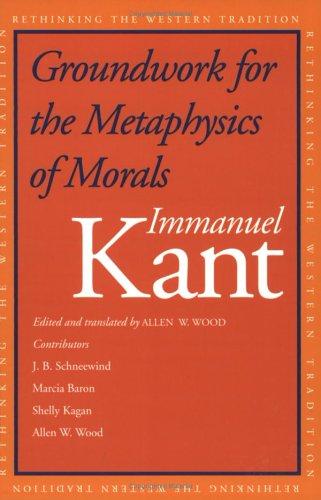
Covers belong to their publishers and are shown so you can recognise the book.
What it holds
These are the questions this philosophy cares about most and the side it leans toward. They are our reading of it, and the same positions the walk uses.
- Duties and rules · clearly Is an act right because of what it leads to?
- Some things are wrong for everyone · clearly Are some moral rules true for everyone, everywhere?
- Everyone counts equally · clearly Does ethics start with yourself and the people close to you, or with equal care for everyone?
- Some things truly are · clearly Are there real facts about right and wrong?
- Reason is the best guide · leaning Where does the most reliable knowledge come from: careful thinking, or what we see, hear and test?
- The person comes first · leaning When a person's wishes and the community's needs pull apart, which should come first?
- Some choices are truly open · leaning Are some choices left open by what came before, or do earlier causes fix everything you do?
Ideas it speaks to
Short articles on the questions this philosophy answers most firmly.
- Results or rules in ethics · leans toward: Duties and rules
- Moral relativism and universal morality · leans toward: Some things are wrong for everyone
- Close people first, or everyone equally · leans toward: Everyone counts equally
- Are there moral facts · leans toward: Some things truly are
- Reason or experience · leans toward: Reason is the best guide
- The person or the community first · leans toward: The person comes first
Compared with
- Kantian deontology versus Aristotelian virtue ethics
- Kantian deontology versus Liberalism
- Kantian deontology versus Utilitarianism
Thinkers
Related philosophies
Runs parallel to
- Utilitarianism · The two are the main modern rivals over whether results or duties make acts right.
More from the Modern Ethics tradition
Sources we used
- Kant's Moral Philosophy · Stanford Encyclopedia of Philosophy, read on 7 October 2026
- Kant's Moral Philosophy · Internet Encyclopedia of Philosophy, read on 7 October 2026
Where do you stand?
Every philosophy takes sides. Here is one question Kantian deontology answers firmly:
Is an act right because of what it leads to?
- Kantian deontology leans toward: Duties and rules
- The other side: Results
The walk asks about this and the questions around it, two ideas at a time, and shows which philosophies your own answers sit closest to. No account, and your answers stay on your device.