
Laozi
Daoist · East Asia · 500 to 400 BCE
Said to be the author of the Daodejing. This short book urges simplicity, humility and living in line with the natural way.
What it is
Laozi, whose name means Old Master, is the legendary Chinese sage traditionally named as the author of the Daodejing and as the founder of Daoism. Chinese sources place him in the sixth century BCE, but some modern scholars hold that he is entirely legendary and that there never was a historical Laozi. What is not in doubt is the importance of the book that carries his name and of the tradition that traces itself to him.
The early sources also call him Lao Dan. The text of the Zhuangzi, written in the late fourth century BCE, is the first to use Laozi as a personal name and to identify him with Lao Dan. Later, the historian Sima Qian wrote a biography of him that scholars treat with caution. In religious Daoism, which arose in the later Han dynasty, Laozi became a deity.
The main ideas
- The Daodejing. The book is short, with 81 chapters and about 5,000 Chinese characters. Its title is commonly translated as something like the classic of the way and its power. It has inspired an immense literature of commentary.
- Wu-wei. The book advocates wuwei, often translated as non-action: acting without forcing, in step with how things naturally go.
- Two forms of Daoism. Both philosophical Daoism, a tradition of thought, and religious Daoism, an organised religion, look back to Laozi. The two are deeply intertwined.
What it looks like in practice
Picture a person who has been pushing hard on a stuck problem for hours, with no result. A reader in the spirit of the Daodejing might suggest stepping back, noticing where the matter is already moving, and giving up the effort to force it. This is an illustration of the idea of wu-wei, not a passage from the book.
Books and moments
- The Daodejing is the book traditionally ascribed to Laozi.
- The Zhuangzi is the first text to treat Laozi as a person and to name him Lao Dan.
- Guodian and Mawangdui are the two archaeological finds, in 1993 and in the 1970s, that changed how scholars study the text.
- Sima Qian's biography is the best-known ancient account of his life.
Questions and criticism
- Was there a Laozi? Some scholars say he is entirely legendary. If so, the question is who wrote the Daodejing and when.
- What does non-action mean? The word can sound like doing nothing, but the tradition uses it for a kind of action. Readers still discuss what it asks of a person.
- One book or many? The finds at Guodian and Mawangdui show that the text had a history before the version we use, so it is fair to ask how much of it goes back to one author.
Close neighbours
The page on Daoism describes the tradition that grew from the book, and the page on Zhuangzi covers the next great Daoist text. The page on Confucius shows the tradition that Daoism is often set against.
Written by epchē in our own words, and checked against independent sources on 9 October 2026. The sources are listed below.
Where to start reading
Books by Laozi or about them, from the easiest way in to the harder ones.
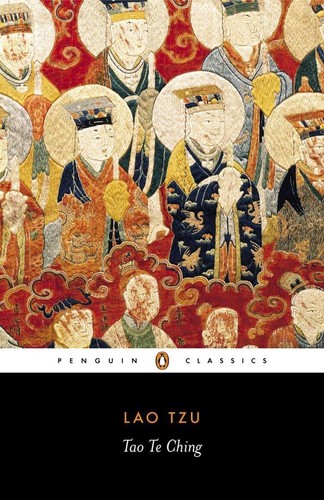
Covers belong to their publishers and are shown so you can recognise the book.
Philosophies they belong to or are close to
Who they connect to
Influenced
- Han Feizi · The Han Feizi contains commentary on the Daodejing, using its ideas about the ruler's restraint. (scholars disagree about this link)
- Wang Bi · His commentary on the Daodejing became the standard reading of that book.
- Zhuangzi · Zhuangzi developed the Daoist themes with humour and paradox.
Other Daoist thinkers
Sources we used
- Laozi · Stanford Encyclopedia of Philosophy, read on 9 October 2026
- Laozi (Lao-tzu) · Internet Encyclopedia of Philosophy, read on 9 October 2026