
Daoism
Daoist · East Asia · from 400 BCE
Daoism comes from ancient China. It says to live in step with the natural way of things and not to force them. It is wary of strict rules and fixed labels.
What it is
Daoism is a tradition from ancient China built around the Dao, the way things naturally go. It teaches living simply and spontaneously, without forcing events, and it doubts that human labels and rules capture how things really are. The name 'Daoist school' was applied later, in the Han dynasty, by historians who sorted earlier writings into groups.
Its roots lie in two early texts from the Warring States period of Chinese history: the Daodejing (also called the Laozi) and the Zhuangzi. Both are short, poetic and playful, and both resist being turned into a list of rules. That resistance is part of the point.
The main ideas
- The Dao. The word means a path or way. It cannot be fully caught in words. It can be thought of as the pattern of what is naturally possible, or as the process of reality itself.
- Wu wei, acting without forcing. This does not mean doing nothing. It means acting in a way that goes with things and is not forced, which is how a skilled person acts when the work seems to do itself.
- Ziran, naturalness. The ideal is spontaneity and simplicity, often pictured as uncarved wood.
- Distrust of human labels. The texts suggest that rigid distinctions and rules create trouble. The Zhuangzi in particular treats right and wrong, and beautiful and ugly, as matters of human judgment, so that no single outlook has final authority.
- Harmony with nature. Align with how things are, instead of imposing a human plan on them.
What it looks like in practice
Picture someone who is trying hard to fall asleep, or to make a conversation go well, or to be spontaneous. The harder they push, the worse it goes. The Daoist observation is that some things come only when we stop forcing them. Learning to act with the grain of a situation, instead of against it, is what wu wei is about, and it takes a lot of practice.
It also gives a way of listening to advice. When a rule says a thing must be done one way, the Daoist asks who made the rule, and whether the situation in front of you agrees.
People and texts
- Laozi is the traditional author of the Daodejing. His own history is uncertain.
- Zhuangzi (Zhuang Zhou) is the author, at least of the early chapters, of the Zhuangzi.
- Wang Bi (226 to 249 CE) wrote a commentary on the Daodejing that shaped how it was read for centuries.
Questions and criticism
- Philosophy or religion? Some writers discuss the philosophical side on its own, and others hold that splitting it from practice and ritual is a Western habit. Both agree the question matters.
- What did the early texts mean? Scholars debate how they were edited, whether the early writers rejected language altogether or treated it as natural, and whether the Dao allows social structures or asks us to give them up.
Close neighbours
Daoism contrasts with Confucianism on ritual, rules and effort. It overlaps with Buddhist ideas of non-attachment and with the Stoic idea of living in agreement with nature, but the three have separate roots.
Written by epchē in our own words, and checked against independent sources on 7 October 2026. The sources are listed below.
Where to start reading
Books for this philosophy, from the easiest way in to the harder ones. Each is chosen for a newcomer, whatever the shop.
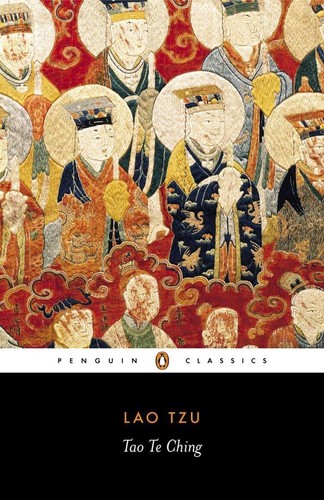

Covers belong to their publishers and are shown so you can recognise the book.
What it holds
These are the questions this philosophy cares about most and the side it leans toward. They are our reading of it, and the same positions the walk uses.
- Everything is always changing · clearly Do things have a fixed nature that lasts, or is the world better seen as constant change?
- Let things settle · clearly When something goes wrong, is the wise move to work out a fix and act on it?
- Close people come first · clearly Does ethics start with yourself and the people close to you, or with equal care for everyone?
- Being a good person · clearly Is ethics mostly about which acts are right, or about what kind of person you become?
- No fixed self · leaning Is there a real, lasting you under your thoughts and feelings?
- Certainty is rare · leaning Can we be sure of some things, or can almost everything be doubted?
- Truth depends on us · leaning Is a belief true because it matches how things really are?
- The person comes first · leaning When a person's wishes and the community's needs pull apart, which should come first?
Ideas it speaks to
Short articles on the questions this philosophy answers most firmly.
- Permanence and change · leans toward: Everything is always changing
- Act on a fix or let things settle · leans toward: Let things settle
- Close people first, or everyone equally · leans toward: Close people come first
- Acts or character in ethics · leans toward: Being a good person
- The self and personal identity · leans toward: No fixed self
- Certainty and doubt · leans toward: Certainty is rare
Compared with
- Daoism versus Confucianism
- Daoism versus Cynicism
- Daoism versus Pragmatism
- Daoism versus Stoicism
- Daoism versus Theravada Buddhism
Thinkers
Related philosophies
Influenced
- Madhyamaka Buddhism · Daoist vocabulary shaped how Buddhist ideas were understood as they entered China. (scholars disagree about this link)
Reacted against by
- Confucianism · Early Daoist texts mock rigid ritual and moral instruction.
Sources we used
- Daoism · Stanford Encyclopedia of Philosophy, read on 7 October 2026
- Daoism · Internet Encyclopedia of Philosophy, read on 7 October 2026
Where do you stand?
Every philosophy takes sides. Here is one question Daoism answers firmly:
Do things have a fixed nature that lasts, or is the world better seen as constant change?
- Daoism leans toward: Everything is always changing
- The other side: Things have a lasting nature
The walk asks about this and the questions around it, two ideas at a time, and shows which philosophies your own answers sit closest to. No account, and your answers stay on your device.