
Madhyamaka Buddhism
Buddhist · South Asia · from 150
Madhyamaka is a Buddhist school. It says nothing exists on its own with a fixed nature, not even the self. Seeing this clearly helps us let go of clinging. Thinkers in the school also argue that it leads us to care about the suffering of all beings.
What it is
Madhyamaka is a school of Indian Buddhist thought, the 'middle way', founded on the work of Nagarjuna. It teaches that nothing has a fixed, independent nature of its own, that things exist only through their relations and conditions, and that seeing this frees us from clinging. It was one of the main schools of Mahayana Buddhism in India.
The word 'empty' is its central term, and it is easy to misread. Emptiness here is not nothingness. It means a lack of independent existence, which is exactly what allows things to change and to cause one another.
The main ideas
- Emptiness. Things are empty of any inherent nature of their own. Nothing exists on its own terms.
- Dependent arising. Everything comes about through conditions and relations. This is the basis of the teaching.
- The middle way. The name refers to a path between holding that things have a fixed existence and holding that nothing exists at all.
- The four-cornered denial. The school rejects all four options about the inherent nature of a thing: it exists, it does not exist, both, or neither. It is used as a method for exposing hidden assumptions.
What it looks like in practice
Picture someone who is sure that they are 'a failure' or 'an anxious person', as if that were a fixed fact about them. A Madhyamaka thinker would ask what is really there to point to. A mood comes and goes. A situation produced it. The label depends on comparisons, on other people, and on a story. When the label is seen as dependent in this way, it loosens its grip.
That is how the idea connects to the freedom the school promises. Clinging needs a solid thing to cling to, and the analysis finds that there is no such thing.
People
- Nagarjuna is the founder of the school.
- Aryadeva was an early follower.
Questions and criticism
- Does it hold a position? One view is that a Madhyamika has no position to defend. Another is that emptiness must be argued for. Nagarjuna described his own view as no thesis.
- Is it nihilism? The charge is that denying inherent natures amounts to saying nothing exists or matters. The school rejects it, through the idea of the middle way: things do not exist in the way we assume, but they are not nothing.
Close neighbours
Madhyamaka is close in spirit to Theravada Buddhism on suffering and non-clinging, but it differs in its philosophy of what things are.
Written by epchē in our own words, and checked against independent sources on 7 October 2026. The sources are listed below.
Where to start reading
Books for this philosophy, from the easiest way in to the harder ones. Each is chosen for a newcomer, whatever the shop.
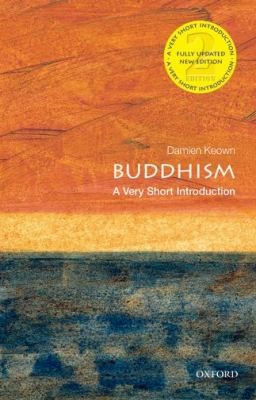
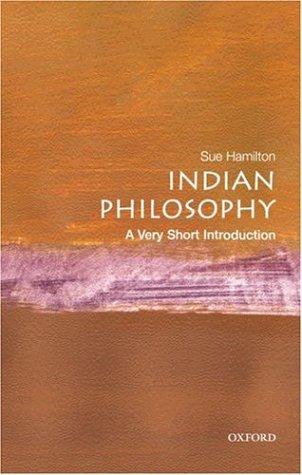
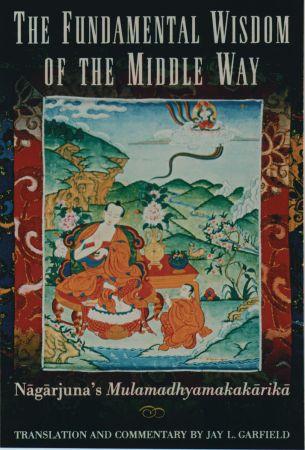
Covers belong to their publishers and are shown so you can recognise the book.
What it holds
These are the questions this philosophy cares about most and the side it leans toward. They are our reading of it, and the same positions the walk uses.
- No fixed self · clearly Is there a real, lasting you under your thoughts and feelings?
- Everything is always changing · clearly Do things have a fixed nature that lasts, or is the world better seen as constant change?
- Everyone counts equally · clearly Does ethics start with yourself and the people close to you, or with equal care for everyone?
- Nothing exists on its own · clearly When you break things down, do you reach basic parts that exist in their own right?
- Certainty is rare · clearly Can we be sure of some things, or can almost everything be doubted?
- Being a good person · clearly Is ethics mostly about which acts are right, or about what kind of person you become?
- Truth depends on us · leaning Is a belief true because it matches how things really are?
- We make meaning, or there is none · leaning Does life have a purpose before you choose anything?
Ideas it speaks to
Short articles on the questions this philosophy answers most firmly.
- The self and personal identity · leans toward: No fixed self
- Permanence and change · leans toward: Everything is always changing
- Close people first, or everyone equally · leans toward: Everyone counts equally
- Basic parts or dependence on everything · leans toward: Nothing exists on its own
- Certainty and doubt · leans toward: Certainty is rare
- Acts or character in ethics · leans toward: Being a good person
Compared with
Thinkers
Related philosophies
Influenced by
- Daoism · Daoist vocabulary shaped how Buddhist ideas were understood as they entered China. (scholars disagree about this link)
Runs parallel to
- Humean empiricism and skepticism · Both take apart the idea of a single unchanging self. (scholars disagree about this link)
- Theravada Buddhism · Both hold no-self. Madhyamaka goes further and says all things are empty. (scholars disagree about this link)
More from the Buddhist tradition
Sources we used
- Madhyamaka · Stanford Encyclopedia of Philosophy, read on 7 October 2026
- Nagarjuna · Internet Encyclopedia of Philosophy, read on 7 October 2026
Where do you stand?
Every philosophy takes sides. Here is one question Madhyamaka Buddhism answers firmly:
Is there a real, lasting you under your thoughts and feelings?
- Madhyamaka Buddhism leans toward: No fixed self
- The other side: A lasting self
The walk asks about this and the questions around it, two ideas at a time, and shows which philosophies your own answers sit closest to. No account, and your answers stay on your device.