
Shankara
Vedanta · South Asia · 788 to 820
Indian teacher of Advaita Vedanta. He held that the self and ultimate reality are one, and that the world of many things is a kind of appearance.
What it is
Shankara was an Indian philosopher and teacher who lived around the eighth century CE and gave classical form to Advaita Vedanta, the school of radical non-dualism. He held that the one reality, Brahman, is the same as the inner self.
He wrote commentaries on the Upanishads, the Bhagavad Gita and the Brahma Sutras. Accounts of his life are mostly later lives of a saint, so the details are uncertain and the pages disagree on his dates.
The main ideas
- Non-duality. Brahman is the only ultimate reality, and the inner self, the atman, is not different from it.
- Ignorance hides the truth. We take the many things of the world to be separate and real because of ignorance, and knowledge of the self's identity with Brahman removes it.
- Teaching through the scriptures. He wrote commentaries on the main Upanishads, the Bhagavad Gita and the Brahma Sutras, and taught listening, reflection and contemplation as ways to this knowledge.
- Monasteries. He is said to have founded monasteries that continue his teaching.
What it looks like in practice
Picture someone who spends years chasing the feeling of being a separate, special self and finds it brings no rest. Shankara's teaching would invite them to look at what in them is aware of all those efforts and ask whether that awareness has the limits they assume. The teaching treats that question as the start of inquiry, not as a final answer, and asks the person to examine it carefully before accepting any conclusion. This is an illustration of the idea, not a saying of Shankara.
Books and moments
- The commentary on the Brahma Sutras is his most famous work.
- His commentaries on the Upanishads and the Gita are the earliest complete ones that survive.
- Many other texts are attributed to him, though scholars doubt that all are his.
Questions and criticism
- Is the world unreal? Whether he held that the world is an illusion or only that its reality is dependent is read differently by later teachers.
- How much of the life story is true? The surviving lives are hagiographies and include legend, so historians are cautious.
- Does knowledge alone free a person? Critics, including later Vedanta schools, ask whether knowing the self's identity with Brahman is enough without devotion and action.
Close neighbours
Advaita Vedanta is the school he shaped. He argued against Buddhist views, and the pages on Advaita Vedanta, Nagarjuna and Madhyamaka show the debate.
Written by epchē in our own words, and checked against independent sources on 9 October 2026. The sources are listed below.
Where to start reading
Books by Shankara or about them, from the easiest way in to the harder ones.
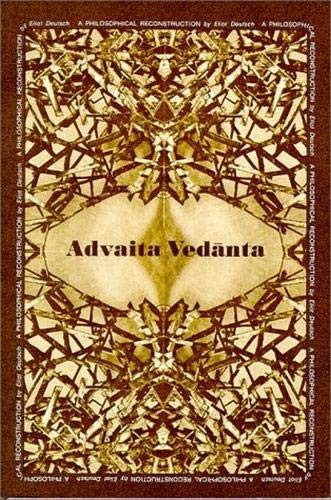
Covers belong to their publishers and are shown so you can recognise the book.
Philosophies they belong to or are close to
Who they connect to
Influenced
- Sarvepalli Radhakrishnan · He defended Advaita Vedanta in a modern, open form. (scholars disagree about this link)
- Sri Aurobindo · He drew on Vedanta, though he rejected the view that the world is only an illusion. (scholars disagree about this link)
- Swami Vivekananda · He taught the Advaita Vedanta of Shankara in a form for modern readers, with a stress on service.
Reacted against by
- Madhva · He rejected the teaching that the world is an illusion and that soul and God are one.
- Ramanuja · Ramanuja argued that Shankara's claim of an illusory world misreads the Upanishads.
Runs parallel to
- Abhinavagupta · Both teach that reality is one consciousness, though Abhinavagupta treats the world as its real play and not an illusion. (scholars disagree about this link)
- Baruch Spinoza · Both defend a monist view in which everything is one reality. (scholars disagree about this link)
Other Vedanta thinkers
- Ramanuja · 1017 to 1137
- Madhva · 1238 to 1317
- Swami Vivekananda · 1863 to 1902
- Sarvepalli Radhakrishnan · 1888 to 1975
Sources we used
- Shankara · Stanford Encyclopedia of Philosophy, read on 9 October 2026
- Adi Shankara · New World Encyclopedia, read on 9 October 2026
- Adi Shankara · Wikipedia, read on 9 October 2026