
Nietzschean perspectivism
Existentialist · Europe · from 1870
Nietzsche said we always see the world from some point of view, never from nowhere. He thought our moral rules grew out of human life and the struggle for power, not pure reason. So he urged people to question inherited values and shape their own.
What it is
Nietzschean perspectivism is the thought of the German philosopher Friedrich Nietzsche (1844 to 1900). Its starting point is that there is no view of the world from nowhere, only views from particular perspectives. With the old religious foundations gone, Nietzsche asks people to create their own values, to be honest about life, and to say yes to it.
Perspectivism is one part of a larger body of work, and how to read that work is much disputed. His main books came out in the 1870s and 1880s, among them The Birth of Tragedy (1872), The Gay Science (1882), Thus Spoke Zarathustra (1883 to 1885), Beyond Good and Evil (1886) and On the Genealogy of Morality (1887).
The main ideas
- Perspectivism. There is only seeing from a perspective, and to understand something better one uses several of them. No view from nowhere is available.
- The death of God. Belief in the Christian God has faded, and with it the values built on that belief. This is a crisis that calls for new values.
- A critique of morality. Common morality grew out of history. Nietzsche contrasts a 'slave' morality of resentment with a 'master' morality of strength, and asks where our values came from and whom they serve.
- Will to power. Living things aim to increase their power, understood as overcoming resistance.
- Eternal recurrence. A thought experiment: imagine your life returning exactly as it is, over and over, and ask whether you could affirm it.
- Creating values and affirming life. The answer to the loss of old values is not despair. It is to create values without a higher authority and to affirm life as it is.
What it looks like in practice
Picture someone who finds themselves defending a belief they have never really examined, only inherited. The Nietzschean questions are not 'is it true?' alone but 'where did this come from, who gains by it, and what kind of life does it serve?'. Then comes a second step: look at the same matter from a different vantage point, and take seriously what shows up there.
The eternal recurrence works as a test of that honesty. If you would be unable to say yes to your life repeating, the question is what you would have to change.
People and moments
- Arthur Schopenhauer and Richard Wagner are named as major influences.
- His sister, Elisabeth, controlled his writings after his breakdown, and this shaped, and sometimes distorted, his reputation.
Questions and criticism
- Is perspectivism relativism? If there are only perspectives, it is fair to ask how Nietzsche can be so confident in his judgments about what is right.
- A system or not? Readers disagree on whether Nietzsche has a unified philosophy despite his distrust of systems.
- Do his values stand on their own? Some readers find real positive values in his work, others mainly criticism.
- Politics. How his ideas relate to politics is contested, and his reputation was shaped by how his writings were later handled.
Close neighbours
Nietzsche is close to existentialism, of which he is a forerunner, and to nihilism, which he diagnosed but wanted to overcome.
Written by epchē in our own words, and checked against independent sources on 7 October 2026. The sources are listed below.
Where to start reading
Books for this philosophy, from the easiest way in to the harder ones. Each is chosen for a newcomer, whatever the shop.
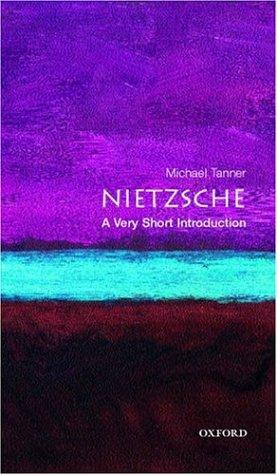
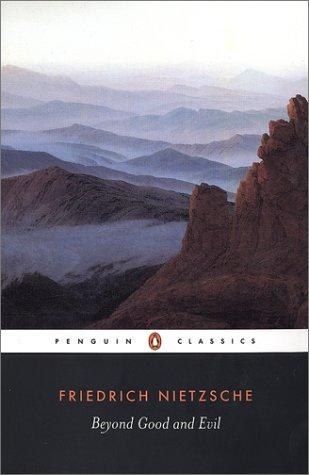
Covers belong to their publishers and are shown so you can recognise the book.
What it holds
These are the questions this philosophy cares about most and the side it leans toward. They are our reading of it, and the same positions the walk uses.
- Right and wrong depend on people · clearly Are some moral rules true for everyone, everywhere?
- Truth depends on us · clearly Is a belief true because it matches how things really are?
- We make meaning, or there is none · clearly Does life have a purpose before you choose anything?
- All within this world · clearly Is everything that matters found inside this world, or does it point to something beyond it?
- Close people come first · clearly Does ethics start with yourself and the people close to you, or with equal care for everyone?
- Everything is always changing · clearly Do things have a fixed nature that lasts, or is the world better seen as constant change?
- Certainty is rare · clearly Can we be sure of some things, or can almost everything be doubted?
- Being a good person · clearly Is ethics mostly about which acts are right, or about what kind of person you become?
Ideas it speaks to
Short articles on the questions this philosophy answers most firmly.
- Moral relativism and universal morality · leans toward: Right and wrong depend on people
- What makes something true · leans toward: Truth depends on us
- Meaning given or made · leans toward: We make meaning, or there is none
- Does meaning need something beyond this world · leans toward: All within this world
- Close people first, or everyone equally · leans toward: Close people come first
- Permanence and change · leans toward: Everything is always changing
Compared with
Thinkers
More from the Existentialist tradition
Sources we used
- Friedrich Nietzsche · Stanford Encyclopedia of Philosophy, read on 7 October 2026
- Nietzsche, Friedrich · Internet Encyclopedia of Philosophy, read on 7 October 2026
Where do you stand?
Every philosophy takes sides. Here is one question Nietzschean perspectivism answers firmly:
Are some moral rules true for everyone, everywhere?
- Nietzschean perspectivism leans toward: Right and wrong depend on people
- The other side: Some things are wrong for everyone
The walk asks about this and the questions around it, two ideas at a time, and shows which philosophies your own answers sit closest to. No account, and your answers stay on your device.