
Nihilism
Existentialist · Europe · from 1799
Nihilism says life has no built-in meaning, and that in the end nothing matters. Many nihilists add that any meaning we make up for ourselves is not real meaning. Some forms also say there is no right or wrong, or that we cannot really know anything.
What it is
Nihilism is a family of views that share one move: they deny that something we usually lean on has a real foundation. It may be that life has no built-in meaning, that there are no moral facts, or that knowledge is impossible. The word got its philosophical sense around 1800 and was made famous by a Russian novel in 1862.
It is not one school with one founder. Depending on what is denied, people speak of existential nihilism (life has no built-in meaning or purpose), moral nihilism (there are no moral facts), epistemological nihilism (knowledge or truth is not possible) and political nihilism (existing institutions should be torn down, with nothing set in their place).
The main ideas
- Existential nihilism. Nothing in the universe gives life a purpose that exists before and apart from what people want. This is the version most people mean today.
- Moral nihilism. Nothing is really right or wrong. Careful philosophers defend this as a serious position, not only as a thought experiment.
- Epistemological nihilism. Knowledge and truth are not available to us.
- Political nihilism. The existing order is to be destroyed, because it cannot be repaired.
What it looks like in practice
Picture someone who has asked, honestly, what their life is for and has found no answer that holds up. Nihilism, in the existential sense, is the position that says: there is none, and that is the end of it. It is a claim about the facts, and a claim about the facts does not tell a person how to feel or live.
That is why people who start from it end up in very different places. Some become despairing, some indifferent, and some use the absence of a given purpose as a reason to look for what they themselves care about.
People and moments
- Friedrich Jacobi gave the word its philosophical meaning around the year 1800. He meant it as a charge, against a line of rationalist thinking that, in his view, ended by dissolving everything real.
- Ivan Turgenev's novel *Fathers and Sons* (1862) made the word widely known through its young character Bazarov, who calls himself a nihilist and rejects inherited beliefs and values. The Russian nihilist movement grew in the decades after.
- Friedrich Nietzsche made nihilism a central problem of European culture. For him it is the moment when the highest values lose their force, linked to the collapse of the Christian faith that European morality had grown out of. He did not welcome it as a destination. He asked how people could make new values after the old ones failed.
Questions and criticism
- Does anyone really hold it? Whether the word names a position anyone really holds, or mainly a fear, is itself disputed. Jacobi used it as an accusation against others.
- Two different claims. Nihilism about morality and nihilism about meaning are different. A person can hold one without the other.
Close neighbours
Existentialism and absurdism start near the problem that nihilism names, and answer it differently. Nihilism says that meaning is absent, and stops there. Existentialism says that meaning is absent until people make it. Absurdism says that the search for meaning meets a silent world, and that we should keep living without false hope. A person who says 'there is no given meaning, and I make my own' sits between nihilism and existentialism.
Written by epchē in our own words, and checked against independent sources on 1 October 2026. The sources are listed below.
Where to start reading
Books for this philosophy, from the easiest way in to the harder ones. Each is chosen for a newcomer, whatever the shop.
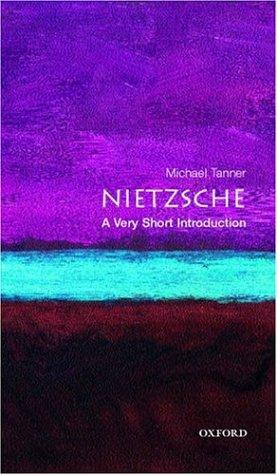
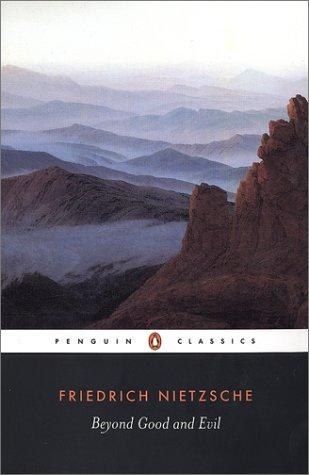

Covers belong to their publishers and are shown so you can recognise the book.
What it holds
These are the questions this philosophy cares about most and the side it leans toward. They are our reading of it, and the same positions the walk uses.
- We make meaning, or there is none · clearly Does life have a purpose before you choose anything?
- Nothing matters in the end · clearly If life has no built-in purpose, does the meaning we make for ourselves still count?
- Nothing is truly right or wrong · clearly Are there real facts about right and wrong?
- Right and wrong depend on people · clearly Are some moral rules true for everyone, everywhere?
- All within this world · clearly Is everything that matters found inside this world, or does it point to something beyond it?
- Certainty is rare · clearly Can we be sure of some things, or can almost everything be doubted?
Ideas it speaks to
Short articles on the questions this philosophy answers most firmly.
- Meaning given or made · leans toward: We make meaning, or there is none
- Does the meaning we make still count · leans toward: Nothing matters in the end
- Are there moral facts · leans toward: Nothing is truly right or wrong
- Moral relativism and universal morality · leans toward: Right and wrong depend on people
- Does meaning need something beyond this world · leans toward: All within this world
- Certainty and doubt · leans toward: Certainty is rare
Compared with
Related philosophies
Runs parallel to
- Absurdism · Both start from a world with no given meaning. Absurdism refuses both despair and false hope.
- Existentialism · Both start from a world with no given meaning. Existentialism asks how to live in it. Nihilism stops at the loss.
More from the Existentialist tradition
Sources we used
- Nihilism · Internet Encyclopedia of Philosophy, read on 1 October 2026
- Moral Skepticism · Stanford Encyclopedia of Philosophy, read on 1 October 2026
- Friedrich Heinrich Jacobi · Stanford Encyclopedia of Philosophy, read on 1 October 2026
- Friedrich Nietzsche · Stanford Encyclopedia of Philosophy, read on 1 October 2026
- Friedrich Nietzsche · Internet Encyclopedia of Philosophy, read on 1 October 2026
- Nihilism · Wikipedia, read on 1 October 2026
- Fathers and Sons (novel) · Wikipedia, read on 1 October 2026
Where do you stand?
Every philosophy takes sides. Here is one question Nihilism answers firmly:
Does life have a purpose before you choose anything?
- Nihilism leans toward: We make meaning, or there is none
- The other side: Meaning is given to us
The walk asks about this and the questions around it, two ideas at a time, and shows which philosophies your own answers sit closest to. No account, and your answers stay on your device.