
Absurdism
Existentialist · Europe · from 1942
Absurdism says we long for meaning, but the world gives us none. That clash is what Camus called the absurd. His answer: do not give up, and do not pretend. Keep living fully, anyway.
What it is
Absurdism is the philosophy of Albert Camus (1913 to 1960), a French writer born in Algeria. It starts from a clash. People long for meaning, for a reason behind things, and the world answers with silence. That mismatch between the longing and the silence is what Camus calls the absurd.
What makes absurdism distinctive is what it does next. It does not conclude that life is worthless, and it does not invent a comforting story to cover the gap. Camus's answer is to keep living fully, with open eyes, and to revolt against whatever crushes people, with no promise of a reward. His main works on the subject are the novel The Stranger (1942), the essay The Myth of Sisyphus (early 1940s), the novel The Plague (1947) and the essay The Rebel (1951).
The main ideas
- The absurd. It is not a fact about the world alone, and not a fact about us alone. It lives in the clash between our demand for meaning and a world that does not supply it.
- No suicide, no leap. Camus rejects ending one's life as a response to the absurd. He rejects just as firmly the leap into religious faith or any promise of meaning that makes the silence stop being a problem.
- Revolt. Instead of acceptance or escape, one lives in plain awareness of the situation and refuses to give in. This is Camus's answer to the absurd.
- Freedom and passion. Without a final purpose to wait for, the weight falls on the present. Camus urges living intensely, in experience and in the beauty of the world.
What it looks like in practice
Picture someone who has stopped believing the story they were once told about why their life matters. There are, on Camus's account, three ways out of that moment. One is to end things. Another is to grab a new certainty, any certainty, so that the question goes quiet. The third is to stay, look straight at it, and live anyway: to work, to notice, to care about the people nearby, and to refuse what crushes them.
That third way is neither cheerful nor bleak. It is closer to a posture, steady and attentive, than to a mood.
People and moments
- Albert Camus is the thinker. Absurdism here means his own thought, not a school with many founders.
- Søren Kierkegaard is the thinker whose leap of faith Camus rejected.
- Jean-Paul Sartre began as Camus's friend and became his opponent. The break was over revolution and political violence.
Questions and criticism
- Was Camus an existentialist? He repeatedly said no, even though his writing shares themes of responsibility and authenticity with the existentialists.
- Can there be an absurdist philosophy at all? If life has no built-in meaning, it is fair to ask how one can argue for a way of living, and how one person's revolt can become a shared 'we'.
Close neighbours
Absurdism shares ground with existentialism and nihilism, but separates from both. It does not say that meaning is something we make for ourselves, as existentialism does, and it does not stop at 'nothing matters', as nihilism does. It also parts from religious answers, because it refuses the consolation they offer.
Written by epchē in our own words, and checked against independent sources on 7 October 2026. The sources are listed below.
Where to start reading
Books for this philosophy, from the easiest way in to the harder ones. Each is chosen for a newcomer, whatever the shop.
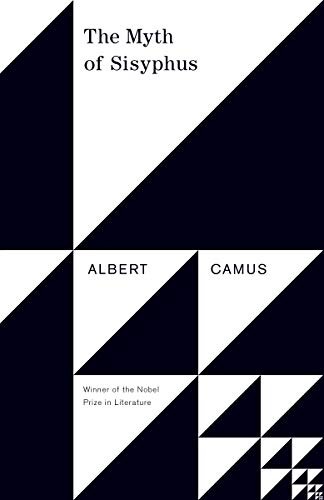
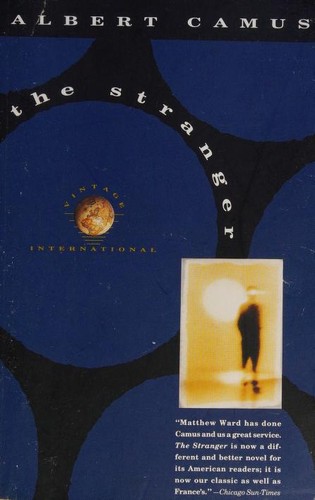
Covers belong to their publishers and are shown so you can recognise the book.
What it holds
These are the questions this philosophy cares about most and the side it leans toward. They are our reading of it, and the same positions the walk uses.
- We make meaning, or there is none · clearly Does life have a purpose before you choose anything?
- A clash that never closes · clearly When the world gives no meaning, is that a freedom, so we make our own and move on?
- All within this world · clearly Is everything that matters found inside this world, or does it point to something beyond it?
- Certainty is rare · clearly Can we be sure of some things, or can almost everything be doubted?
- What we make of life matters · leaning If life has no built-in purpose, does the meaning we make for ourselves still count?
- Right and wrong depend on people · leaning Are some moral rules true for everyone, everywhere?
Ideas it speaks to
Short articles on the questions this philosophy answers most firmly.
- Meaning given or made · leans toward: We make meaning, or there is none
- The absurd, a clash that does not close · leans toward: A clash that never closes
- Does meaning need something beyond this world · leans toward: All within this world
- Certainty and doubt · leans toward: Certainty is rare
- Does the meaning we make still count · leans toward: What we make of life matters
- Moral relativism and universal morality · leans toward: Right and wrong depend on people
Compared with
- Absurdism versus Existentialism
- Absurdism versus Liberalism
- Absurdism versus Nihilism
- Absurdism versus Pragmatism
Thinkers
Related philosophies
Runs parallel to
- Nihilism · Both start from a world with no given meaning. Absurdism refuses both despair and false hope.
More from the Existentialist tradition
Sources we used
- Albert Camus · Stanford Encyclopedia of Philosophy, read on 7 October 2026
- Camus, Albert · Internet Encyclopedia of Philosophy, read on 7 October 2026
Where do you stand?
Every philosophy takes sides. Here is one question Absurdism answers firmly:
Does life have a purpose before you choose anything?
- Absurdism leans toward: We make meaning, or there is none
- The other side: Meaning is given to us
The walk asks about this and the questions around it, two ideas at a time, and shows which philosophies your own answers sit closest to. No account, and your answers stay on your device.