
Albert Camus
Modern European · Europe · 1913 to 1960
French-Algerian writer who described the clash between our need for meaning and a world that stays silent. He urged us to rebel against it without despair. He rejected the label "existentialist".
What it is
Albert Camus (1913 to 1960) was a French-Algerian writer, journalist and playwright who described the absurd as the clash between our demand for meaning and a world that gives none, and who answered it with revolt and with a full life, not with suicide or with hope in another world. He denied that he was a philosopher and disliked being called an existentialist, but his essays and novels pose some of the best-known questions of twentieth-century philosophy.
He began as a journalist and playwright in Algeria. During the Second World War he took part in the French Resistance and edited the newspaper Combat. His novels The Stranger, The Plague and The Fall and his essays The Myth of Sisyphus and The Rebel made him internationally known. He won the Nobel Prize for literature in 1957 and died in a car accident in January 1960.
The main ideas
- The absurd. Human beings keep asking for order and meaning, and the universe does not answer. The absurd is that gap between the demand and the silence. He thought of it as a defining feature of the modern human condition.
- The one serious question. The Myth of Sisyphus begins by saying that there is only one really serious philosophical question, and that is suicide: whether life is worth living once we accept that it has no given meaning.
- No easy exits. He rejected two ways out. One is to give up the question by taking refuge in religion, which he called philosophical suicide. The other is to end one's life. He held that the task is to keep living with the absurd, without pretending it away.
- Imagining Sisyphus happy. Sisyphus, in the Greek myth, pushes a rock up a mountain and sees it roll down again, forever. Camus ends the essay by saying that we must imagine him happy: the struggle itself is enough to fill a person's heart.
- Revolt. The second great idea is revolt, an attitude of defiance or resistance to whatever oppresses human beings. He distinguished it from terrorism and from reckless egoism, which he rejected.
- From suicide to murder. In The Rebel he turns from the question of suicide to the question of murder, and asks whether rebellion and political violence can be justified. He also wrote about the death penalty, and The Plague includes a character who works to end it.
What it looks like in practice
Picture someone who has worked toward a goal for years and learns that the result will mostly be forgotten. Camus would not tell them that it was all for something larger, and he would not tell them to give up. He would ask them to look straight at the situation, to keep working because the work is theirs, and to treat the lack of a final reward as the condition of their freedom. This is an illustration of his attitude, not a quotation.
Books and moments
- The Stranger is the novel that made him famous.
- The Myth of Sisyphus is his main essay on the absurd and on suicide.
- The Plague is a novel about a town struck by an epidemic, in which characters respond in different ways, including one who works to end the death penalty.
- The Rebel is his essay on revolt and political violence. It led to his break with his friend Jean-Paul Sartre.
Questions and criticism
- Is he a philosopher? He denied it, and he did not argue the way academic philosophers do. Many readers still treat the absurd as a serious philosophical position.
- Is he an existentialist? He is often called one, but he refused the label. Whether his refusal or the common description is more accurate is still argued.
- Can one live without hope and be happy? The idea of imagining Sisyphus happy has moved many readers and left others unconvinced. It is fair to ask whether a calm acceptance of the absurd is a form of resignation.
Close neighbours
The page on absurdism describes the way of thinking that grew from his ideas, and the page on existentialism covers the movement he is often grouped with, and wished to stay apart from. The page on Sartre shows the thinker he quarrelled with.
Written by epchē in our own words, and checked against independent sources on 9 October 2026. The sources are listed below.
Where to start reading
Books by Albert Camus or about them, from the easiest way in to the harder ones.
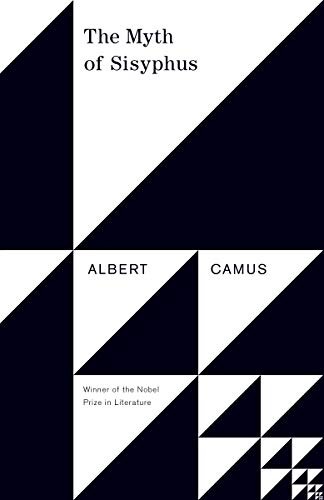
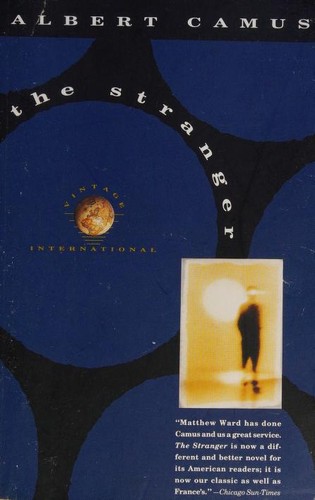
Covers belong to their publishers and are shown so you can recognise the book.
Philosophies they belong to or are close to
Who they connect to
Influenced by
- Friedrich Nietzsche · Camus' The Rebel and other works engage Nietzsche's affirmation of life without ready-made meaning.
- Simone Weil · Camus edited Weil's writings for publication and called her the only great spirit of her time.
- Søren Kierkegaard · Camus responded to Kierkegaard's leap of faith and refused it.
Reacted against
- Jean-Paul Sartre · Camus rejected the existentialist label and split with Sartre over revolutionary politics.
Other Modern European thinkers
- Arthur Schopenhauer · 1788 to 1860
- Alexis de Tocqueville · 1805 to 1859
- Thomas Henry Huxley · 1825 to 1895
- Wilhelm Dilthey · 1833 to 1911
- Friedrich Nietzsche · 1844 to 1900
- Sigmund Freud · 1856 to 1939
- Georg Simmel · 1858 to 1918
- Henri Bergson · 1859 to 1941
- Max Weber · 1864 to 1920
- Ernst Cassirer · 1874 to 1945
Sources we used
- Albert Camus · Stanford Encyclopedia of Philosophy, read on 9 October 2026
- Camus, Albert · Internet Encyclopedia of Philosophy, read on 9 October 2026