
William James
American · North America · 1842 to 1910
American psychologist and philosopher who judged beliefs by their results in life. He defended "the will to believe".
What it is
William James (1842 to 1910) was an American psychologist and philosopher who spent most of his career at Harvard. He worked in and between physiology, psychology and philosophy, and he helped to make pragmatism, the view that ideas are to be understood by their practical effects, one of the leading American philosophies.
His twelve-hundred-page Principles of Psychology (1890) gave us the phrase the stream of thought. He also wrote on religious experience, on the will to believe, and on an empiricism so broad that it includes the relations between things as part of experience. He was the brother of the novelist Henry James.
The main ideas
- Pragmatism. An idea is to be understood by what difference it makes in practice, and its truth is tied to how well it works in the life of the person who holds it.
- The stream of thought. Consciousness is not a string of separate atoms but a continuous flow, always changing, always selecting what it attends to.
- The will to believe. In some live and important choices, where the evidence cannot settle the matter, it is reasonable to let our wishes and our feelings play a part in what we believe.
- Radical empiricism. The relations between things, such as connection and succession, are given in experience just as much as the things themselves are.
- A theory of emotion. He proposed that the bodily response comes first and the feeling of the emotion follows, an idea later called the James-Lange theory.
What it looks like in practice
Picture someone deciding whether to take a risk on a new career when no amount of research can tell them how it will turn out. James would say that waiting for proof is also a choice, and that in a case like this it can be reasonable to commit and to let the commitment help make the outcome. This is an illustration of the idea, not a quotation.
Books and moments
- The Principles of Psychology (1890) is his masterwork, mixing physiology, psychology and philosophy.
- The Varieties of Religious Experience is his study of personal religious feeling.
- Pragmatism is his best-known statement of the pragmatist view of truth.
Questions and criticism
- Is true just what works? Critics ask whether a belief can be useful and false, and whether his account lets wishful thinking count as truth.
- Is the will to believe a license? The essay has been defended as a limited argument and attacked as an excuse for believing without evidence.
- Can feeling follow the body? His theory of emotion has been revised, but the question of how the body and feeling relate is still discussed.
Close neighbours
He is counted with Peirce and Dewey as a founder of pragmatism. The pages on Peirce, Dewey and Pragmatism show the movement they began.
Written by epchē in our own words, and checked against independent sources on 9 October 2026. The sources are listed below.
Where to start reading
Books by William James or about them, from the easiest way in to the harder ones.
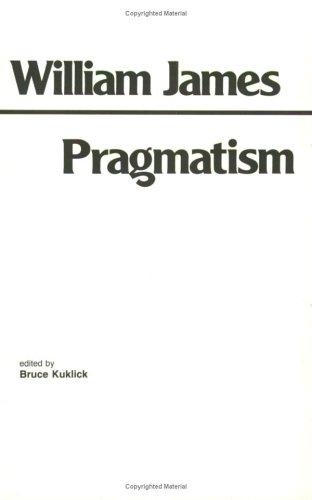
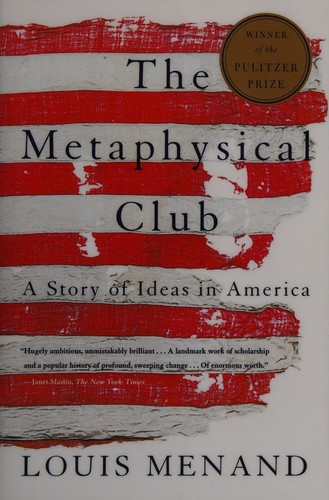
Covers belong to their publishers and are shown so you can recognise the book.
Philosophies they belong to or are close to
Who they connect to
Influenced
- John Dewey · Dewey extended pragmatism into education and politics.
- Nishida Kitaro · Nishida took the notion of pure experience from William James.
Influenced by
- Blaise Pascal · James discusses Pascal's wager in The Will to Believe when defending faith under uncertainty.
- Charles Sanders Peirce · James popularised pragmatism after taking up Peirce's idea.
Other American thinkers
- Ralph Waldo Emerson · 1803 to 1882
- Henry David Thoreau · 1817 to 1862
- Charles Sanders Peirce · 1839 to 1914
- Josiah Royce · 1855 to 1916
- John Dewey · 1859 to 1952
- George Santayana · 1863 to 1952
- Roy Wood Sellars · 1880 to 1973
- Ayn Rand · 1905 to 1982
- Thomas Kuhn · 1922 to 1996
- Paul Kurtz · 1925 to 2012
Sources we used
- William James · Stanford Encyclopedia of Philosophy, read on 9 October 2026
- William James · New World Encyclopedia, read on 9 October 2026
- William James · Wikipedia, read on 9 October 2026