
John Dewey
American · North America · 1859 to 1952
American thinker who saw learning as solving problems. He linked democracy and education to a lifetime of trying things out.
What it is
John Dewey (1859 to 1952) was an American philosopher and educator, one of the early founders of pragmatism, who treated thinking as problem-solving by a living creature in its surroundings and argued that schools and public life should work in the same experimental way. He was among the most prominent American thinkers of the first half of the twentieth century, with a reach far beyond philosophy into education, psychology and democratic theory.
He was born in 1859 in Burlington, Vermont. He taught at the University of Chicago, where he founded the Laboratory School to test his ideas about learning, and later at Columbia University in New York, where he spent the rest of his professional life. He also wrote for the general public on social questions, notably in the New Republic, and became a leading social commentator of his day.
The main ideas
- Knowledge is something we do. Dewey rejected the picture of a mind that passively looks at the world and records it. Knowledge, for him, arises from the active adaptation of a human being to the surroundings.
- Inquiry starts with trouble. Thinking begins when a habitual way of acting meets an obstacle. A person then tries out ideas, tests them in action and settles on a new way of going on. The ideas are tools, which is why he adopted the word instrumentalism for his approach.
- Learning by doing. He applied this view of knowledge to teaching. A school should be a place where children meet real problems and work them out, not a place where facts are poured in. The School and Society (1899) and Democracy and Education (1916) set this out.
- Democracy as a way of life. His writing on democratic theory and practice held that democracy needs people able to think together about shared problems, so education and public life belong together.
- Philosophy tied to everyday problems. Like James before him, he thought philosophy had grown too technical and cut off from the everyday questions it should help with.
What it looks like in practice
Picture a class asked to deal with a real problem, such as why the pond near the school keeps drying out. Instead of memorising a chapter, the children guess at causes, test them, argue about the results and change their minds. Dewey would say that the lesson is not only the answer, it is the habit of looking at a trouble, trying something, and seeing what happens. This is an illustration, not a classroom he described.
Books and moments
- The School and Society (1899) was his first major work on education.
- Democracy and Education (1916) is perhaps his most important book in that field.
- Experience and Nature (1925) and The Quest for Certainty (1929) set out his general view of knowledge and the world.
- Art as Experience and A Common Faith (both 1934) extended his approach to art and religion.
Questions and criticism
- Idealism in disguise? Critics said his views were closer to idealism than to the scientific naturalism he claimed, and more confusing than clarifying.
- Is every idea only a tool? If ideas are judged by how well they help us act, it is fair to ask what makes an idea true and not just useful.
- Can schools carry that much? Dewey asked a great deal of education. It is fair to ask whether schools can do the work of democratic life as he hoped.
Close neighbours
Dewey belongs with Peirce and James among the founders of pragmatism, and the page on pragmatism describes the school as a whole. His early influences included the idealism of Hegel's followers and the biology of Darwin.
Written by epchē in our own words, and checked against independent sources on 9 October 2026. The sources are listed below.
Where to start reading
Books by John Dewey or about them, from the easiest way in to the harder ones.
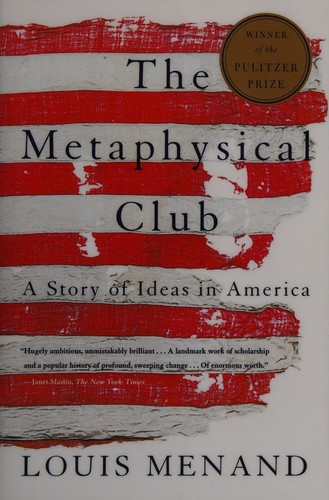
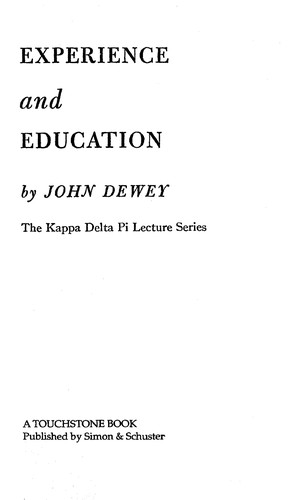
Covers belong to their publishers and are shown so you can recognise the book.
Philosophies they belong to or are close to
Who they connect to
Influenced
- B. R. Ambedkar · He studied under Dewey in New York and took up his view of democracy as a way of shared life.
- Hu Shih · He studied under Dewey and spread his pragmatism in China.
- Kwasi Wiredu · Wiredu wrote on pragmatism and held that ideas should be judged by their practical use. (scholars disagree about this link)
- Richard Rorty · Rorty called Dewey a hero and set out to renew his pragmatism.
Influenced by
- G. W. F. Hegel · Dewey started as a Hegelian and kept a sense of thought developing within history.
- William James · Dewey extended pragmatism into education and politics.
Other American thinkers
- Ralph Waldo Emerson · 1803 to 1882
- Henry David Thoreau · 1817 to 1862
- Charles Sanders Peirce · 1839 to 1914
- William James · 1842 to 1910
- Josiah Royce · 1855 to 1916
- George Santayana · 1863 to 1952
- Roy Wood Sellars · 1880 to 1973
- Ayn Rand · 1905 to 1982
- Thomas Kuhn · 1922 to 1996
- Paul Kurtz · 1925 to 2012
Sources we used
- John Dewey · Stanford Encyclopedia of Philosophy, read on 9 October 2026
- Dewey, John · Internet Encyclopedia of Philosophy, read on 9 October 2026