
Charles Sanders Peirce
American · North America · 1839 to 1914
American thinker and logician who started pragmatism, the idea that an idea means whatever difference it makes in practice.
What it is
Charles Sanders Peirce (1839 to 1914) was an American scientist and philosopher, the founder of pragmatism, who held that the meaning of an idea lies in its practical effects and that belief is best settled by the method of science. He was also a logician and a theorist of signs. Although he is now counted among the greatest American minds, he never held a lasting academic post.
He was born in Cambridge, Massachusetts, in 1839, and made his living largely as a scientist with the U.S. Coast and Geodetic Survey, while teaching logic for a time at Johns Hopkins University. In 1872 he helped start the Metaphysical Club in Cambridge with William James and others, a discussion group in which his ideas were aired. He died in 1914 on a farm in Pennsylvania.
The main ideas
- The pragmatic maxim. To understand an idea, ask what practical effects it would have if it were true. A concept with no practical or experiential effect on how we act or investigate is, he held, empty. In this way the maxim clears away disputes that make no difference to anyone.
- Settling belief. In his essays "The Fixation of Belief" and "How to Make Our Ideas Clear" (1877 and 1878) he argued that doubt is an uncomfortable state that inquiry exists to end, and that the scientific method is the best way to settle belief.
- A scientist's philosophy. He applied the standards of scientific work to philosophy. He admired Kant and answered Kant's system of categories in 1867, but his approach was logical and scientific.
- Logic and signs. He wrote on mathematical and general logic and on the general theory of signs, which he called semeiotic.
What it looks like in practice
Picture two people arguing over whether a mixed drink is 'strong'. Peirce's maxim invites them to ask what would be different if it were or were not strong. If nothing could ever be told apart, there is nothing to argue about. If something could, the argument turns into a test they can run. This is an illustration of the rule, not an example he gave.
Books and moments
- The Fixation of Belief and How to Make Our Ideas Clear (1877 and 1878) appeared in a monthly magazine and became the founding texts of pragmatism.
- The Metaphysical Club (1872) was the Cambridge discussion group he started with William James.
Questions and criticism
- Why did he go unrecognised? He was unable to gain lasting academic employment, and was often in financial difficulty. It was James and Dewey who made pragmatism widely known.
- Same pragmatism? James and Dewey took up and spread his ideas, but they went their own ways, and it is still discussed how far their versions are the same school.
- Does everything useful count as meaningful? It is fair to ask whether a rule that ties meaning to practical effects leaves room for ideas that matter without changing what we do.
Close neighbours
The page on pragmatism describes the school he founded, and the pages on James and Dewey show how it developed after him. The page on Kant is a useful companion, since Peirce answered Kant's system in his early work.
Written by epchē in our own words, and checked against independent sources on 9 October 2026. The sources are listed below.
Where to start reading
Books by Charles Sanders Peirce or about them, from the easiest way in to the harder ones.
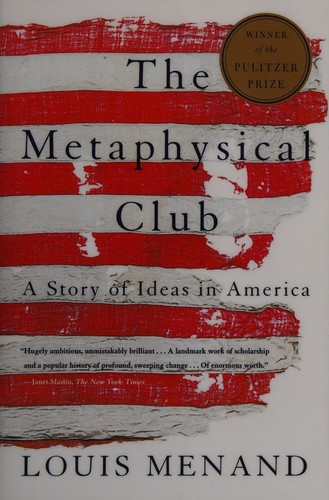
Covers belong to their publishers and are shown so you can recognise the book.
Philosophies they belong to or are close to
Who they connect to
Influenced
- Josiah Royce · He took up Peirce's idea of a community of interpreters and used it in his late work. (scholars disagree about this link)
- Jurgen Habermas · Habermas and Karl-Otto Apel drew on Peirce's community of inquirers.
- William James · James popularised pragmatism after taking up Peirce's idea.
Influenced by
- John Duns Scotus · Peirce called himself a scholastic realist in the tradition of Scotus.
- Thomas Reid · Peirce's idea that we should trust common sense, but check it, grew from the Scottish school.
Runs parallel to
- Karl Popper · Both hold that knowledge is fallible and advances by testing ideas.
Other American thinkers
- Ralph Waldo Emerson · 1803 to 1882
- Henry David Thoreau · 1817 to 1862
- William James · 1842 to 1910
- Josiah Royce · 1855 to 1916
- John Dewey · 1859 to 1952
- George Santayana · 1863 to 1952
- Roy Wood Sellars · 1880 to 1973
- Ayn Rand · 1905 to 1982
- Thomas Kuhn · 1922 to 1996
- Paul Kurtz · 1925 to 2012
Sources we used
- Charles Sanders Peirce · Stanford Encyclopedia of Philosophy, read on 9 October 2026
- Peirce, Charles Sanders · Internet Encyclopedia of Philosophy, read on 9 October 2026